|
Archeological find halts project
WHAT LIES BENEATH: Yilan County Government officials say pottery fragments, which date back hundreds of years, have been discovered at a site earmarked for rezoning
By Yu Ming-ching / Staff reporter
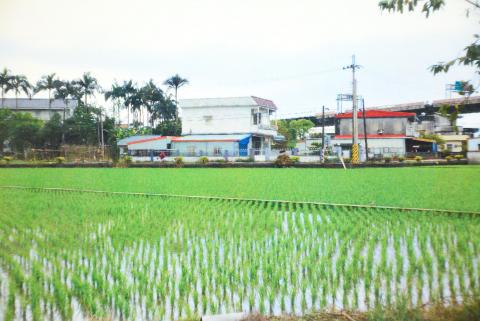
The Yilan County Government has had to stop its rezoning of this area of Wuyuan Village in Dongshan Township because it overlaps with an archeological site.
Photo: Yu Ming-chin, Taipei Times
The Yilan County Government recently halted a land reallocation project in the agricultural Wuyuan Village (武淵) after a preliminary excavation that it oversaw found about 2,000 artifacts associated with the Wuyuan archeological site.
The archeological site is located between Wuyuan Elementary School and Jiading Bridge over the Dongshan River (冬山河).
According to county government officials, the site was inhabited by the Kavalan people, dates to between 200 and 600 years ago and is a branch of Shihsanhang culture (十三行文化).
The site predates the Dutch colonial era and had about 1,000 households, but the population diminished due to diseases and attacks by Han military forces to a point where the entire village was wiped out.
A preservation assessment conducted by the Yilan County Cultural Affairs bureau found that the artifacts in the west of the site had not received due attention, as the findings consisted mostly of pottery fragments discovered in vegetable fields.
Yilan County Government’s Department of Land initially proposed the land redistribution project in the hope of sorting out the complex property rights on the site and to mitigate the damage brought by torrential rains and flooding.
The department found out about the overlapping of the two sites in May, when assessments for the redistribution was being carried out, and brought the Wuyuan site under the Cultural Heritage Preservation Act (文化資產保存法), which states that if an archeological site is discovered during a project, the project shall be halted, undergo a plan change, or be postponed until necessary archaeological work has been completed.
County government officials said that relics excavated included artifacts such as pottery spinning wheels, glass and agate marbles, as well as assorted specimens of flora and fauna, such as seeds, plants, insects and mollusks.
The relics span a 2.39-hectare site, which overlaps with the 8.39-hectare land distribution area, the officials said.
source: Taipei Times
|